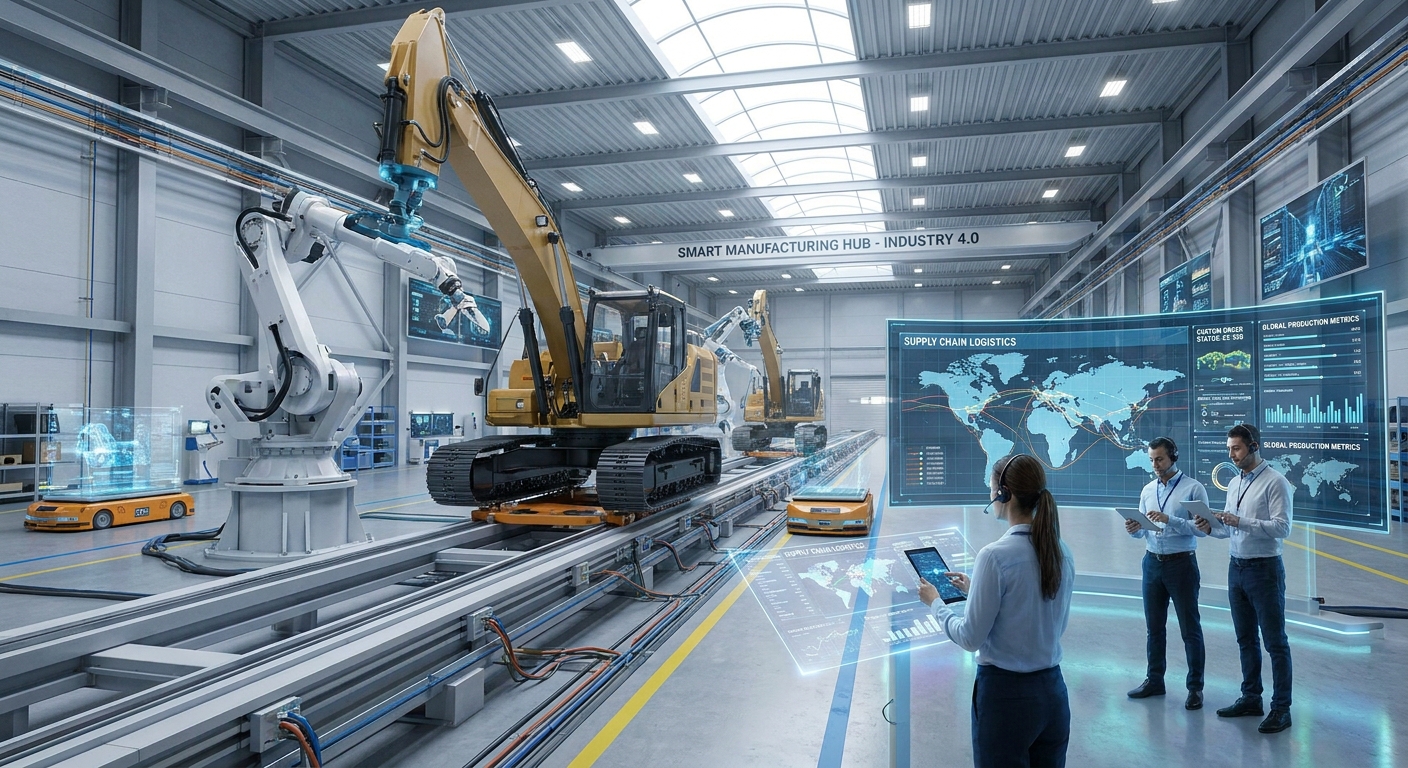
The manufacturing of heavy equipment forms the bedrock of global infrastructure, construction, mining, and agriculture. A sector traditionally characterized by its robust, long-lifecycle products and often conservative innovation cycles, it is now undergoing a profound transformation. This article delves into the pivotal trends that are not merely adjusting but fundamentally redefining the entire value chain, from raw material sourcing to customer delivery and after-sales service.
Evolving Supply Chain Dynamics
Recent global disruptions, from pandemics to geopolitical shifts, have illuminated the vulnerabilities of lean, globally extended supply chains. Heavy equipment manufacturers are actively rethinking their strategies to build greater resilience and agility.
Building Resilience and Agility
The shift from a pure just-in-time model to a more balanced 'just-in-case' approach is evident. This involves diversifying supplier bases, establishing strategic buffer stocks for critical components, and investing in end-to-end supply chain visibility tools. The goal is to detect potential disruptions early and respond swiftly, minimizing production halts. Practical advice: Implement robust risk assessment frameworks for your supplier network and explore multi-sourcing options for key components.
The Shift Towards Localization
While globalization of sales markets continues, there's a growing trend towards localizing production and sourcing. This reduces lead times, lowers transportation costs, mitigates geopolitical risks, and supports sustainability objectives by shortening logistics routes. Manufacturers are forging closer ties with regional suppliers to create more robust, localized ecosystems. Practical advice: Evaluate the potential for developing regional supplier partnerships, especially for high-volume or high-risk components.
The Rise of Customization and Personalization
The days of a one-size-fits-all approach are rapidly fading. Customers now demand heavy equipment tailored to highly specific operational requirements, environmental conditions, and regulatory compliance.
Mass Customization Strategies
Manufacturers are increasingly adopting modular designs and configurable platforms that allow for significant customization without resorting to full bespoke engineering for every order. This 'mass customization' enables a broad range of product variations, meeting diverse client needs efficiently. Practical advice: Invest in flexible manufacturing systems and adopt a modular product architecture to facilitate quicker configuration and assembly of customized units.
Impact on Design and Engineering
Customization demands a more agile and iterative design process. Advanced simulation tools, CAD/CAM software, and Product Lifecycle Management (PLM) systems are crucial for managing complex product variations and ensuring design integrity. Collaborative design environments, often involving customer input early in the process, are becoming standard. Practical advice: Leverage advanced design software and establish collaborative platforms that allow for real-time adjustments and customer feedback integration.
Globalization of Production Sites
While some aspects of sourcing are localizing, the overall strategic placement of manufacturing facilities remains a global endeavor, albeit with new considerations.
Nearshoring and Reshoring Considerations
Geopolitical tensions, rising labor costs in traditional offshore hubs, and a renewed focus on supply chain resilience are prompting a re-evaluation of manufacturing locations. Nearshoring (moving production closer to primary sales markets) and reshoring (bringing production back to the home country) are gaining traction, driven by reduced lead times, improved quality control, and mitigated geopolitical risks. Practical advice: Conduct comprehensive total cost of ownership analyses when evaluating production sites, considering not just direct costs but also logistical, regulatory, and risk factors.
Global Footprint Optimization
Manufacturers are strategically optimizing their global footprint, establishing production hubs in key regions to serve local markets while leveraging global expertise and economies of scale. This involves balancing centralized core manufacturing with decentralized final assembly and customization capabilities. Practical advice: Develop a clear global manufacturing strategy that aligns production capabilities with market demand and optimizes the flow of goods across your network.
The Digital Transformation Imperative
Perhaps the most transformative trend is the pervasive adoption of digital technologies throughout the manufacturing value chain.
Digital Manufacturing and Industry 4.0
The integration of IoT (Internet of Things), AI, automation, robotics, and additive manufacturing (3D printing) is creating 'smart factories.' These facilities feature connected machines, real-time data exchange, and predictive maintenance capabilities, significantly enhancing efficiency, reducing downtime, and improving product quality. Practical advice: Start with pilot projects for digital integration, focusing on specific bottlenecks or high-impact areas, and invest in upskilling your workforce for new technologies.
Harnessing Industrial Analytics for Decision Making
Heavy equipment generates vast amounts of data, from production line performance to in-field operational metrics. Industrial analytics transforms this raw data into actionable insights. Predictive analytics can forecast maintenance needs, optimize inventory levels, and enhance quality control, while prescriptive analytics can recommend optimal operational parameters. Practical advice: Implement robust data collection infrastructure, partner with data analytics experts if necessary, and focus on extracting actionable insights that drive continuous improvement and innovation.
Conclusion
The heavy equipment manufacturing sector is navigating a complex landscape defined by dynamic supply chains, the imperative for hyper-customization, strategic globalization, and pervasive digital transformation. These are not isolated changes but interconnected forces that demand agility, innovation, and data-driven decision-making. Manufacturers that embrace these trends will not only remain competitive but will redefine what's possible in the industry, ensuring they continue to power progress worldwide. For dealers of new and used machinery, these trends signify both challenges and immense opportunities to provide tailored solutions and high-tech equipment.