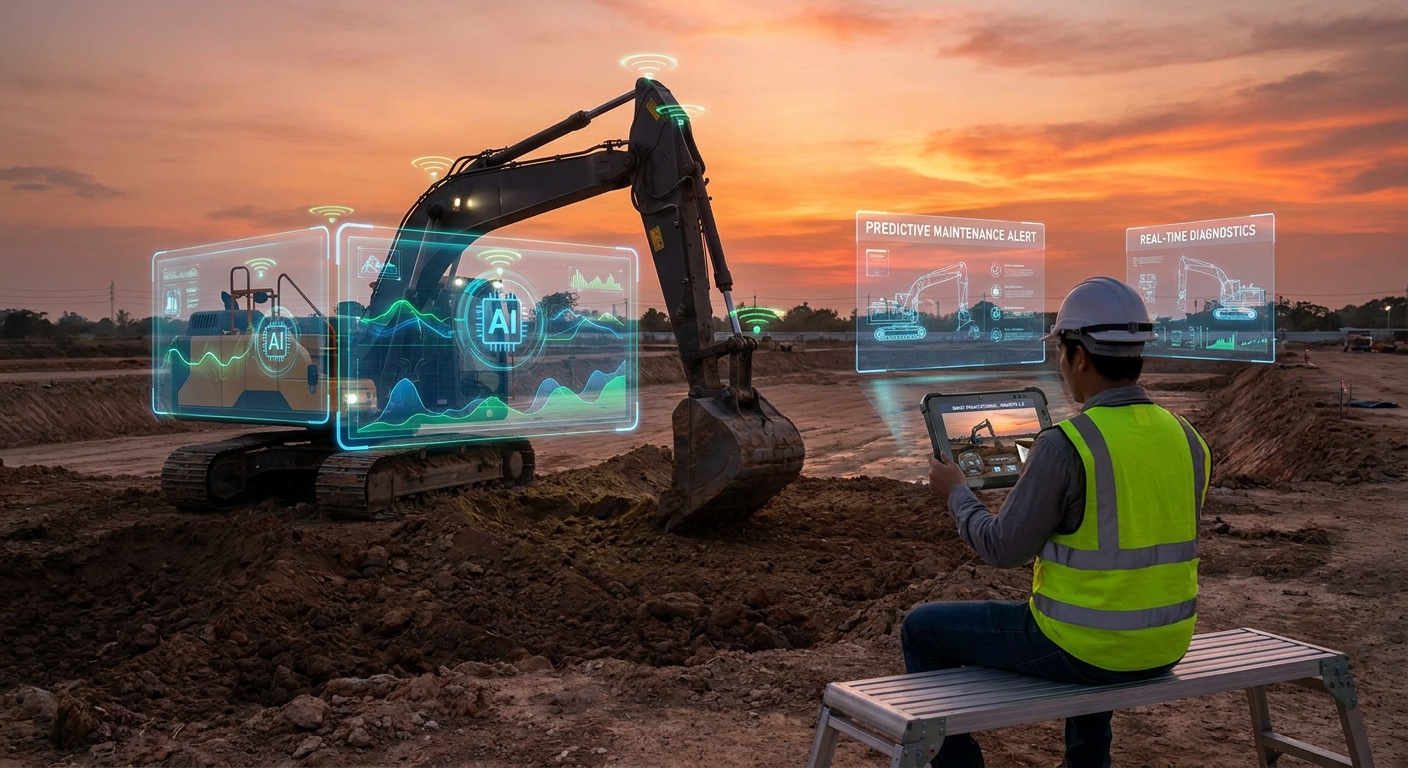
The heavy equipment industry, long characterized by its robust machinery and manual operations, is undergoing a profound metamorphosis. Driven by advancements in technology, a digital transformation is reshaping how companies manage their fleets, execute projects, and maintain assets. This shift is not merely an upgrade but a fundamental re-imagining of operational efficiency, safety, and productivity, with automation, artificial intelligence (AI), and predictive maintenance at its core. For dealers of new and used heavy machinery, understanding and embracing these trends is crucial for guiding clients toward future-proof solutions.
The Dawn of Automation in Heavy Equipment
Automation is no longer a futuristic concept but a present-day reality in heavy equipment. From remotely operated excavators to self-driving haul trucks, automated systems are revolutionizing construction sites, mining operations, and large-scale infrastructure projects. The primary benefits extend beyond mere labor reduction, leading to safer, more precise, and consistently productive operations.
Enhanced Precision and Safety
Automated systems perform repetitive tasks with unparalleled accuracy, minimizing errors that lead to costly rework or material waste. GPS-guided bulldozers achieve exact specifications on grade and slope, improving project quality and reducing manual checks. Crucially, automation removes human operators from hazardous environments, like unstable terrain or extreme weather, dramatically enhancing workplace safety and reducing accident rates.
Optimizing Workflow and Resource Allocation
Beyond individual machine operations, automation facilitates seamless integration of various equipment types and project phases. Advanced telematics provide real-time data on machine location, operational status, and fuel consumption, allowing managers to optimize workflows and allocate resources effectively. This leads to better fleet utilization, reduced idle times, and streamlined project execution, boosting overall productivity and adherence to timelines.
Artificial Intelligence: The Brain Behind the Machines
While automation handles the 'doing,' Artificial Intelligence provides the 'thinking.' AI algorithms analyze vast datasets generated by heavy equipment, identifying patterns, making predictions, and even learning from past experiences to optimize future operations. This intelligent layer elevates machine capabilities from mere task execution to smart, adaptive performance.
Data-Driven Decision Making
AI processes mountains of data from sensors, telematics, and operational logs, transforming raw information into actionable insights. This enables project managers to make informed decisions regarding equipment deployment, maintenance schedules, fuel optimization, and project bidding. By predicting potential bottlenecks, AI empowers proactive management, reducing risks and maximizing profitability.
Autonomous Operations and Advanced Robotics
The pinnacle of AI integration in heavy equipment is autonomous operation. Self-driving dozers, excavators, and dump trucks, guided by AI, LiDAR, and vision systems, can operate continuously with minimal human intervention. This increases operational hours and ensures consistent performance regardless of operator fatigue. AI also powers advanced robotics for specialized tasks, enhancing precision and speed in complex or dangerous applications.
Predictive Maintenance: Revolutionizing Uptime
Perhaps one of the most impactful applications of digitalization for heavy equipment is predictive maintenance. Traditionally, maintenance was reactive (repairing after a breakdown) or preventive (scheduled based on time or usage). Predictive maintenance, powered by AI and IoT sensors, shifts this paradigm entirely.
From Reactive to Proactive
Instead of waiting for a breakdown or adhering to rigid schedules, predictive maintenance uses real-time data to anticipate potential failures. Sensors monitor critical components – engines, hydraulics, transmissions – for subtle changes in vibration, temperature, pressure, or fluid levels. AI algorithms analyze these data streams, identifying anomalies indicating impending issues.
Leveraging IoT and Sensor Data
The backbone of predictive maintenance is the extensive network of IoT sensors embedded within modern heavy machinery. These sensors continuously collect and transmit operational data to a central system. This constant flow of information allows for continuous monitoring of equipment health, providing an accurate, up-to-the-minute status rather than relying on periodic inspections.
Cost Savings and Extended Asset Life
The benefits are substantial. By identifying and addressing minor issues before they escalate, companies avoid costly catastrophic failures, significantly reduce unplanned downtime, and minimize emergency repair expenses. Optimized maintenance schedules mean components are replaced only when truly necessary, extending parts and asset lifespan, ultimately leading to significant cost savings. For dealers, this means providing clients with machines offering a lower total cost of ownership.
Practical Implications for Heavy Equipment Operators and Dealers
Embracing digital transformation requires more than just acquiring new technology; it demands a strategic shift in operations and mindset.
Investing in Training and Skill Development
The new era requires a workforce equipped with new skills. Operators need training in managing automated systems, interpreting data dashboards, and overseeing AI-powered processes. Maintenance technicians must evolve into diagnosticians, adept at analyzing sensor data and performing data-driven interventions. Dealers can play a vital role by offering training programs or connecting clients with relevant resources.
Partnering for Technology Integration
Implementing these advanced technologies can be complex. Operators should seek partnerships with technology providers, equipment manufacturers, and dealers who understand the intricacies of integration. Dealers can position themselves as trusted advisors, offering solutions that bundle new or rebuilt machinery with telematics, AI platforms, and predictive maintenance services.
Embracing Data Security
As operations become more data-centric, ensuring robust cybersecurity measures is paramount. Protecting sensitive operational data from breaches or unauthorized access is critical for maintaining operational integrity and trust.
The digital transformation, driven by automation, AI, and predictive maintenance, is not merely improving the heavy equipment industry; it's fundamentally redefining it. These technologies offer a competitive edge, delivering smarter, safer, and more precise operations alongside unprecedented uptime and efficiency. For businesses dealing in new and used heavy machinery, embracing this evolution means offering clients comprehensive solutions that provide superior performance and long-term value. The future of heavy equipment is undeniably digital, promising a more productive, sustainable, and profitable landscape.