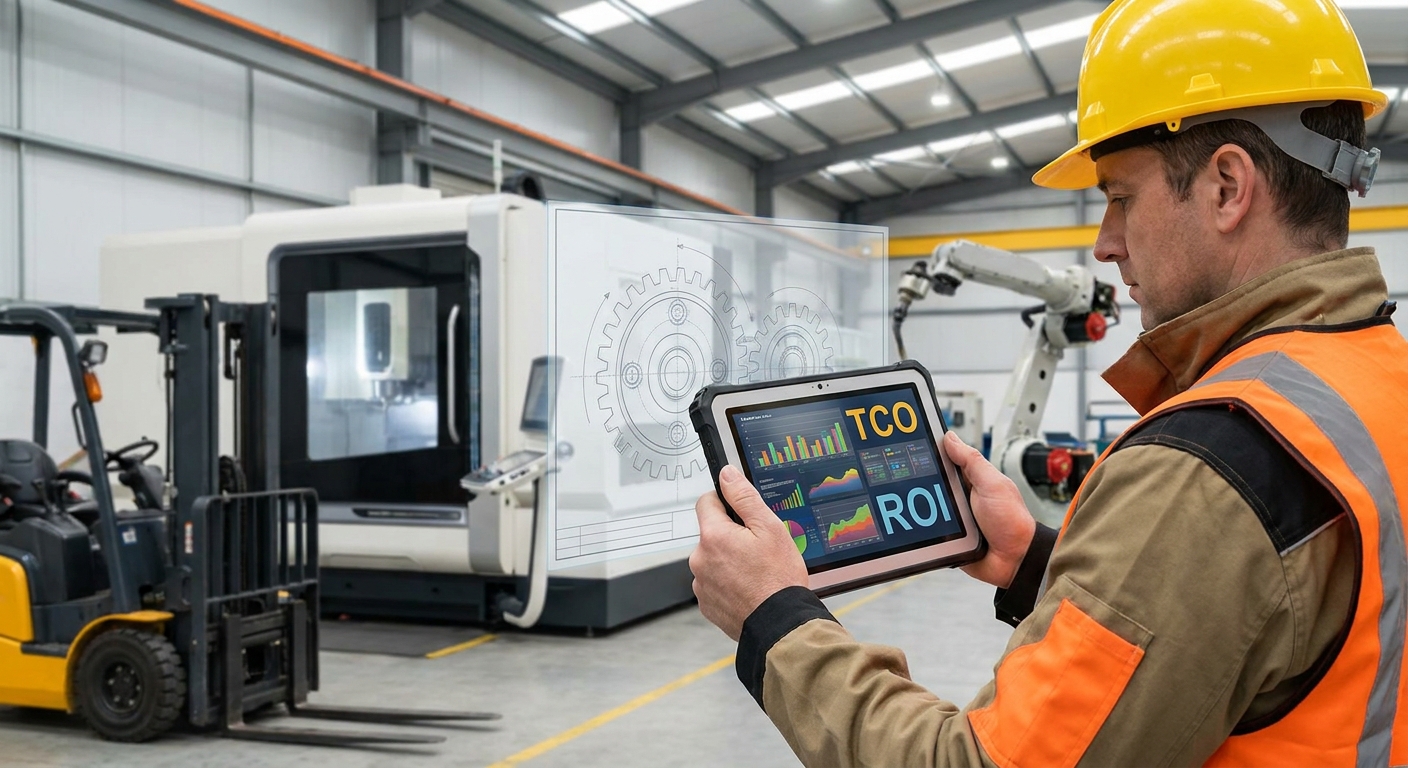
The significant capital investment in heavy industrial equipment demands a meticulous and strategic approach. For B2B buyers, the decision extends far beyond the initial purchase price, deeply impacting long-term operational efficiency, productivity, and profitability. This comprehensive guide delves into critical technical criteria, illuminates the nuances of Total Cost of Ownership (TCO), and emphasizes the crucial role of Return on Investment (ROI) in making truly informed purchasing decisions for new, used, or rebuilt machinery.
THE FOUNDATION: CRITICAL TECHNICAL CRITERIA
A thorough understanding of your operational needs is the bedrock for selecting appropriate machinery. Technical specifications must align precisely with your current and anticipated demands.
Capacity and Performance Match
Evaluate the equipment's rated capacity against your required throughput, load limits, and operational speed. Consider both peak demands and average usage. Future-proofing is key; will the machine accommodate growth or evolving production needs? Ensure compatibility with your existing infrastructure, power supply, and integration with current production lines. An underperforming machine bottlenecks operations, while an over-specified one leads to unnecessary capital expenditure and higher running costs.
Reliability and Durability
Uptime is paramount in industrial settings. Research the equipment's track record for reliability, examining its material quality, construction standards, and expected lifespan. Consider the operating environment—extreme temperatures, dust, or corrosive materials demand robust, purpose-built machinery. A reliable machine minimizes costly breakdowns and maintains consistent production schedules. Investigate the manufacturer's reputation and long-term support for parts and service.
Maintenance Requirements and Serviceability
Ease of maintenance directly impacts operational costs and downtime. Assess how easily routine checks, lubrication, and filter changes can be performed. Determine the availability of spare parts and lead times. Local service support and access to skilled technicians are invaluable for swift repairs and preventative maintenance. Don't overlook the need for operator and maintenance staff training; a well-trained team ensures optimal performance and extends equipment life.
Safety and Compliance
Safety is non-negotiable. Ensure the equipment adheres to all relevant industry safety standards and regulations (e.g., OSHA, CE, ISO). Evaluate integrated safety features like emergency stops, interlocking guards, and clear warning systems. Compliance protects your workforce, prevents costly accidents, and avoids legal liabilities, demonstrating a commitment to operational excellence.
BEYOND THE PRICE TAG: UNDERSTANDING TOTAL COST OF OWNERSHIP (TCO)
The purchase price is merely the tip of the iceberg. Total Cost of Ownership (TCO) provides a holistic financial picture, encompassing all direct and indirect costs associated with an asset over its entire lifecycle.
Initial Investment
This includes the actual purchase price (which varies significantly between new, used, or rebuilt options), along with associated costs such as shipping, installation, commissioning, and any necessary site preparation or modifications. Include potential financing charges if the equipment is leased or purchased with a loan.
Operational Costs
These are the recurring expenses vital for the equipment's day-to-day function. Key factors include energy consumption (fuel, electricity), consumables (lubricants, filters, tooling), and the labor costs of operators. High energy consumption or expensive consumables can erode profitability over time, making energy-efficient models an attractive option despite a higher initial outlay.
Maintenance and Downtime Costs
This category covers scheduled preventative maintenance, unscheduled repairs, and the cost of spare parts. More importantly, it includes the often-overlooked cost of downtime—lost production, missed deadlines, and potential impact on customer satisfaction. A machine with lower maintenance demands and higher reliability contributes significantly to reduced TCO.
End-of-Life Costs
Consider the costs associated with decommissioning, dismantling, and disposing of the equipment. Conversely, evaluate its potential residual value or resale market. Well-maintained, quality machinery often retains a higher resale value, offsetting some of the initial investment.
MEASURING SUCCESS: RETURN ON INVESTMENT (ROI)
ROI quantifies the financial benefit of your investment, providing a clear metric for its economic viability. It answers the fundamental question: "What financial gain will this equipment bring relative to its cost?"
Calculating and Projecting ROI
ROI is typically calculated as: (Gain from Investment - Cost of Investment) / Cost of Investment.
"Gain from Investment" can manifest in several ways:
* Increased Revenue: Higher production output, ability to take on new projects, improved product quality leading to higher pricing.
* Cost Savings: Enhanced efficiency, reduced labor requirements, lower waste generation, energy savings.
* Intangible Benefits: Improved workplace safety, better market positioning, competitive advantage, or enhanced brand reputation can also indirectly contribute to ROI.
To project ROI accurately, collect data on current production costs and efficiency, then model the improvements the new equipment is expected to deliver. Compare potential ROI across different equipment options (new vs. used vs. rebuilt) to identify the most financially advantageous choice.
MAKING THE INFORMED DECISION
The selection of heavy industrial equipment is a complex process demanding a holistic perspective. Technical prowess, TCO, and ROI are intertwined and must be evaluated concurrently. Conduct thorough due diligence: request detailed specifications, perform site visits, watch demonstrations, and speak with references who own similar equipment. Negotiate comprehensively with suppliers, discussing not just the price but also warranties, service contracts, parts availability, and training packages.
Remember, whether you choose a new, meticulously engineered machine, a cost-effective used model, or a meticulously rebuilt piece of equipment, the ultimate goal is to optimize your operations. By diligently assessing technical criteria, forecasting TCO, and projecting ROI, B2B buyers can make strategic choices that drive long-term success and profitability for their organizations.